
Executive answer: Sourcing branded corporate workwear at scale requires more than a logo and a garment sample. The buyer needs a clear role-based product range, fabric selected for the working environment, a graded size system, documented branding, an agreed MOQ and delivery plan, and quality checks that protect consistency across locations and reorders.
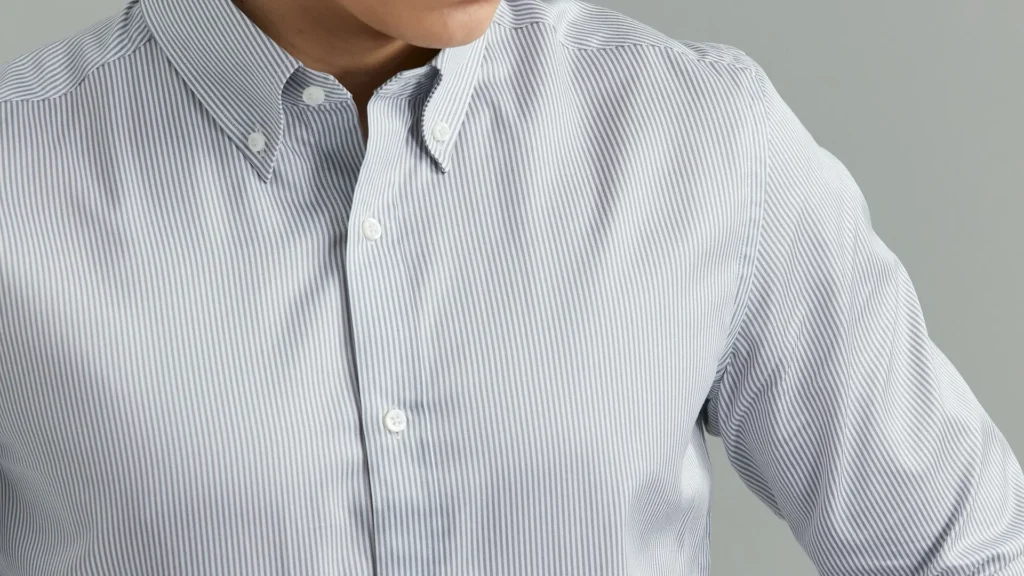
This guide is for procurement teams, operations managers, hospitality groups, facilities companies, retailers, logistics businesses, and other organizations buying custom workwear from a manufacturer. It explains how to evaluate fabric, garment architecture, branding, size planning, MOQ, lead time, inspection, and total program cost.
What is branded corporate workwear?
Branded workwear is clothing designed for a defined job and a defined operating environment. It may include shirts, overshirts, trousers, jackets, vests, aprons, or outerwear, each with a consistent brand language. A professional program connects the garment to the role: front-of-house staff need a polished appearance, maintenance teams need movement and durability, and delivery or warehouse teams may need visibility and practical storage.
The first step is to create a role matrix. For each team, record the work environment, movement level, indoor or outdoor exposure, laundering method, seasonal needs, required pockets, safety considerations, logo location, and replacement frequency. This prevents a single attractive garment from being forced onto every job.
1. Design the range around roles, not just products
| Role requirement | Useful design direction | Specification to confirm |
|---|---|---|
| Client-facing office or reception | Clean shirts, knitwear, vests, or tailored layers | Appearance, comfort, collar line, branding discretion |
| Hotel and service operations | Easy-care shirts, trousers, waistcoats, and light jackets | Wash cycle, stain visibility, mobility, color continuity |
| Facilities and maintenance | Durable overshirts, trousers, jackets, and utility details | Abrasion, pocket position, reinforcement, movement allowance |
| Warehouse, logistics, and field teams | Layered workwear and high-visibility or weather options where required | Climate, visibility rules, outerwear compatibility, care process |
Keep the range visually connected through color, trim, label, and logo rules. A coherent range allows employees to move between roles while the brand remains recognizable. It also simplifies ordering because the specification can be shared across locations.
2. Choose fabric for wear, care, and climate
Workwear fabric should be evaluated against the full life of the garment: how it feels at the start of a shift, how it behaves after repeated washing, how it looks under lighting, and how quickly it can be replaced. Common directions include cotton for a natural hand feel, poly-cotton for a balance of durability and easy care, and performance blends when stretch, recovery, or moisture management are important.
| Decision | Questions for the supplier |
|---|---|
| Fiber composition | What is the composition, and is it consistent across the approved fabric lot? |
| Weight and weave | Is the fabric suitable for the climate, role, season, and layering plan? |
| Color | What color reference and approval swatch will control future production? |
| Durability | How will pilling, abrasion, shrinkage, and color change be evaluated? |
| Care | What wash, dry, press, and commercial-laundry conditions are expected? |
Request physical swatches and, when the garment will be washed frequently, test a sample through the intended care process. A fabric that performs well in a showroom may not be the right choice for a busy hotel, factory, or field-service environment.
3. Build a practical pattern and size system
Workwear must support the employee’s movement while keeping a professional shape. Check reach, bending, sitting, lifting, climbing stairs, and wearing the garment over the expected base layer. Important measurements may include chest, shoulder, sleeve, biceps, garment length, waist, rise, thigh, knee, hem, and pocket position.
Use finished-garment measurements instead of relying only on letter sizes. Maintain separate blocks where the workforce needs them, and record grading rules so a new size can be added without changing the proportions of the whole range. If staff wear different layers in summer and winter, test the outer garment over the actual base layer.
4. Make the branding repeatable
Logo application should be specified in measurable terms: artwork version, width, location, thread or label color, stitch or label type, backing, and acceptable tolerance. Common options include embroidery, woven labels, printed branding, branded buttons, neck labels, and packaging. The best option depends on fabric, laundering, visibility, and the role of the employee.
Approve the logo on the actual garment, not only on a digital mock-up. Keep photographs of the front, back, sleeve, chest, labels, and packaging with the production file. When a group has several locations, also define whether the logo is identical everywhere or whether a branch identifier is permitted.
5. Plan MOQ, lead time, and the total cost of ownership
MOQ is affected by styles, fabric colors, material booking, size ratios, logo methods, and production efficiency. GAZO commonly plans custom workwear projects from 100 pieces per style, but the final quantity should be confirmed after the role matrix, fabric, size range, and branding are reviewed.
GAZO commonly plans around 15–25 days for standard bulk production after final sample approval, subject to quantity, fabric readiness, construction, branding, and finishing. A complete schedule should separate sampling, approval, material booking, cutting, sewing, finishing, inspection, and packing. If the program has a fixed opening date or seasonal launch, build contingency into the delivery plan.
Compare the total program cost, not just unit price. Consider sampling, pattern work, labels, packaging, inspection, freight, replacement garments, size exchanges, and the cost of re-developing a style for every reorder. A supplier that retains the approved specification can reduce repeat development and protect consistency.
6. Define quality control before bulk production
A workwear inspection plan should cover fabric shade, composition records, finished measurements, seam construction, button or zipper security, pocket placement, logo position, stains, loose threads, pressing, folding, and carton quantity. Set measurement tolerances and defect categories before production starts.
For a multi-location program, inspect the first production pieces against the approved sample and keep a signed record. If the workwear includes several garment types, use a separate checklist for each style. The inspection record should identify the style, size, fabric reference, order, inspector, date, non-conforming quantity, and corrective action.
7. Build the reorder and replacement process
Uniform demand changes as teams grow, employees leave, branches open, and garments wear out. A practical reorder file should contain the approved sample, pattern version, fabric code, color standard, size chart, logo artwork, trim list, packaging method, care instructions, inspection notes, and the date of the last approval.
Define a simple replacement process for employees: how sizes are measured, who approves the request, how the garment is packed, and how inventory is recorded. This turns workwear from an ad hoc expense into a manageable operating system.
Recommended sourcing workflow
- Map the roles: Document work conditions, movement, climate, care, pockets, branding, and replacement needs.
- Build the range: Select garments and layers that work together across departments.
- Shortlist materials: Compare physical swatches, weight, weave, care, color, and availability.
- Develop the sample: Confirm pattern, size chart, construction, logo, labels, and packaging.
- Run a wear review: Test representative employees during real tasks and record changes.
- Freeze the standard: Approve the sample, grading, artwork, trims, size ratio, and inspection plan.
- Produce and inspect: Track milestones and verify the bulk order against the approved standard.
- Archive for reorders: Store all technical and visual records for replacement and expansion orders.
Branded workwear for growing teams
GAZO supports custom workwear programs for corporate, hotel, retail, facilities, logistics, and service teams. Review the custom workwear program, compare hotel uniform solutions, explore corporate shirt options, or send your role matrix for a quotation.
Frequently asked questions
What is the MOQ for custom workwear?
GAZO commonly plans from 100 pieces per style. The final MOQ depends on garment types, fabric, color splits, size range, branding, and material availability.
How do we choose workwear fabric?
Start with the working environment and care process. Compare fiber composition, weight, weave, comfort, durability, color stability, and laundering requirements using physical swatches and samples.
How long does branded workwear production take?
GAZO commonly plans around 15–25 days for standard bulk production after final sample approval. The confirmed schedule depends on quantity, material readiness, construction, branding, and finishing.
How can a multi-location company keep uniforms consistent?
Use one approved specification containing the sample, pattern, fabric code, color standard, size chart, logo artwork, trims, packaging, and inspection notes. Apply the same record to every reorder.
Should every department wear the same garment?
Not always. The range should share a visual identity, but the garment should match the role’s movement, climate, safety, storage, and care requirements. A role-based range is usually more durable and more comfortable.