
Executive answer: A reliable custom dress shirt program is built around a written product specification, an approved size set, a controlled fabric lot, and a repeatable quality process. For office, hotel, bank, retail, and service teams, the right supplier should be able to develop the shirt, document the approved sample, produce the first order, and reproduce the same fit and appearance during future reorders.
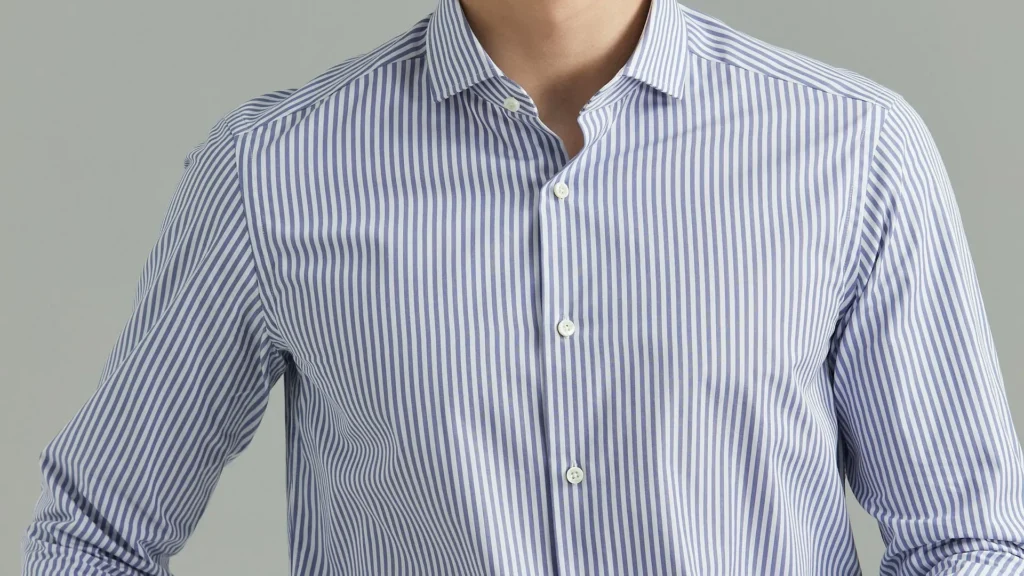
This guide explains how corporate buyers can evaluate fabric, fit, branding, MOQ, lead time, inspection, and reorder controls when sourcing custom dress shirts from China. It is written for purchasing managers, uniform consultants, hotel operators, and brand teams—not for one-off fashion orders.
What is a custom dress shirt program?
A custom dress shirt program is a repeatable uniform system rather than a single garment purchase. The program normally includes the shirt block, fabric and color standard, collar and cuff construction, logo placement, size chart, packaging, quality checkpoints, and a record for future replenishment. This approach matters when employees work across several locations or when new staff must receive the same shirt months after the original order.
For a professional result, separate the specification into four layers:
- Product: silhouette, collar, cuff, pocket, buttons, seam construction, and finishing.
- Material: fiber composition, fabric weight, weave, finish, color reference, and care requirement.
- Branding: embroidery or woven label, logo size, placement, thread color, neck label, and packaging.
- Control: approved sample, measurement tolerance, inspection plan, packing list, and reorder record.
1. Select fabric for the actual working environment
Fabric choice should follow the employee’s work pattern, not only the swatch appearance. A hotel front-desk team may need a polished surface, easy care, and comfort through long shifts. A bank or office team may prioritize opacity, a clean collar line, and a formal hand feel. A field service team may need stronger abrasion resistance and easier laundering.
| Fabric direction | Best fit | Trade-off to confirm |
|---|---|---|
| High-count cotton | Executive and client-facing shirts | Comfort and hand feel versus wrinkle management |
| Poly-cotton blend | Large daily-wear teams and uniform programs | Durability and easy care versus natural-fiber feel |
| Non-iron or easy-care finish | Hospitality, retail, and service roles | Finish durability after repeated washing |
| Oxford or textured weave | Business-casual and durable office programs | Texture, breathability, and color availability |
Ask the supplier to state the fiber composition, approximate weight, usable width, finish, color method, shrinkage expectation, and care instructions. If the shirt will be washed frequently, request a wash test or production sample rather than approving a digital image alone. A color that looks correct on screen can change under store lighting, office lighting, or different laundering conditions.
2. Build a size chart that works for real employees
Using only generic S, M, and L labels is a common cause of returns and inconsistent team presentation. A corporate size chart should define finished-garment measurements for the chest, shoulder, sleeve, biceps, cuff, shirt length, collar, and hem. Men’s and women’s blocks should be reviewed separately because shoulder shape, bust allowance, waist shaping, and preferred shirt length are different fit problems.
Before approving the size set, test the shirt in the positions employees actually use: standing, seated, reaching forward, lifting an arm, and wearing the shirt tucked in. Check collar comfort, armhole mobility, sleeve length, button tension, and whether the hem stays neat during a full shift. The goal is not the smallest possible measurement; it is a stable, professional fit that employees can wear repeatedly.
3. Approve the sample as a production standard
A sample should answer more than “does it look good?” The approval record should identify the fabric code, color reference, size, construction details, logo artwork, label version, and any approved deviations. Mark the sample as approved for bulk production and keep clear photographs of the front, back, collar, cuff, logo, inside seams, and packaging.
For larger programs, a size set is more useful than a single sample. It shows whether grading remains balanced from the smallest to the largest size. If the shirt is for multiple countries, agree how body measurements, local sizing labels, and care instructions will be handled before production begins.
4. Treat branding as a measurable specification
Corporate branding becomes inconsistent when the logo is approved only by appearance. Record the logo width, distance from the placket or pocket, vertical position, thread or label color, stitch density, and backing material. Confirm whether the logo is embroidered on the wearer’s left chest, sleeve, cuff, or another location. The same artwork should be used for the sample, production file, and reorder file.
Also specify buttons, neck labels, care labels, hangtags, folding method, individual polybags, carton marks, and size stickers. These details affect both the employee experience and the time required to distribute uniforms across locations.
5. Understand MOQ, lead time, and price drivers
MOQ is usually determined by fabric booking, cutting efficiency, color splits, and the number of styles—not by the shirt alone. GAZO commonly plans custom shirt projects from 100 pieces per style, but the final MOQ should be confirmed against fabric availability, size ratio, color count, and branding requirements.
For planning purposes, a typical workflow is sample development, approval, material booking, bulk cutting, sewing, finishing, inspection, and packing. GAZO commonly quotes around 15–20 days for standard bulk production after sample approval, subject to quantity, fabric readiness, and finishing complexity. Treat this as a planning range, not a guaranteed delivery date; request a project schedule with the quote.
When comparing prices, ask what is included. Important cost drivers include fabric composition and finish, pattern complexity, logo method, label quantity, packaging, size ratio, special testing, and freight terms. The lowest unit price is not necessarily the lowest total cost if inconsistent sizing creates rework or if reorders require a new development cycle.
6. Put quality control and reorders into the original brief
A professional supplier should define quality checks before production, not after complaints. The inspection plan can include fabric shade, measurements, seam appearance, button security, collar symmetry, logo position, stains, loose threads, pressing, folding, and carton quantity. Agree the measurement tolerance and the handling of non-conforming pieces in writing.
Reorder control is equally important. Keep one digital record containing the approved sample photographs, fabric code, color standard, size chart, grading rules, logo file, trims, packing specification, and the date of approval. When a factory retains this record, a second order can be treated as a controlled replenishment instead of a new design project.
Recommended workflow for a corporate shirt order
- Brief: Share employee roles, use environment, quantity, locations, target delivery window, and brand requirements.
- Fabric shortlist: Compare composition, weight, weave, care, color, and availability.
- Pattern and sample: Confirm the block, construction, branding, and measurement chart.
- Wear review: Test the sample with representative employees and record changes.
- Pre-production approval: Sign off the final sample, artwork, labels, packaging, and size ratio.
- Bulk production: Track material booking, cutting, sewing, finishing, and inspection.
- Reorder file: Archive the approved specification for future locations and employee replacement orders.
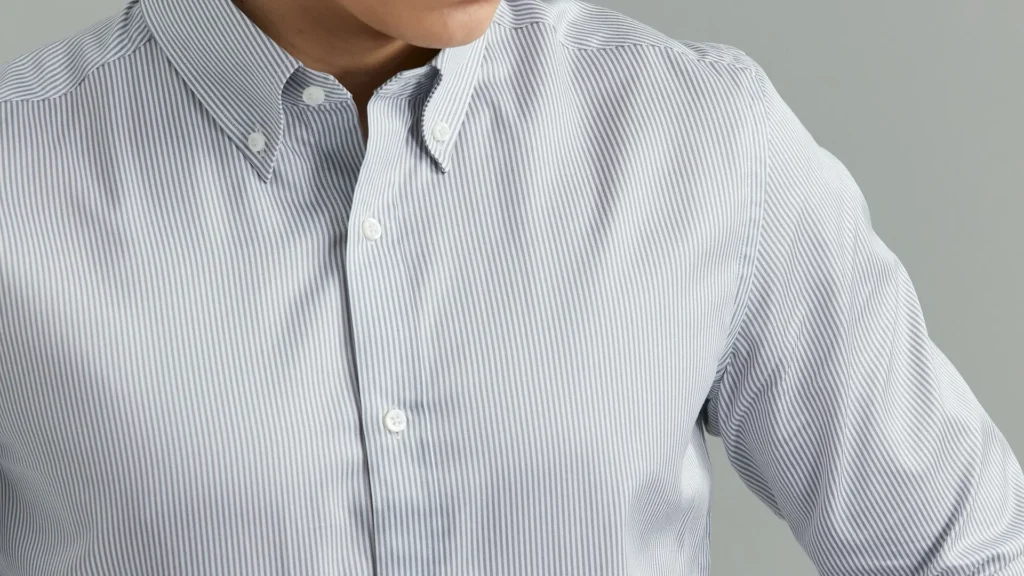
Corporate dress shirt buyer checklist
| Area | Questions to answer before approval |
|---|---|
| Fabric | What are the composition, weight, finish, color reference, shrinkage expectation, and care instructions? |
| Fit | Are the men’s and women’s blocks, finished measurements, grading, and tolerances documented? |
| Branding | Are logo size, placement, artwork, thread color, labels, and packaging recorded? |
| Production | What are the MOQ, sample timeline, bulk timeline, production capacity, and material status? |
| Quality | Who checks measurements, construction, logo placement, appearance, and packing quantity? |
| Reorders | Will the factory retain the approved sample and specification for the next order? |
How GAZO supports custom dress shirt programs
GAZO develops custom dress shirts for corporate teams, hotels, banks, offices, retail groups, and service businesses. The program can include fabric selection, collar and cuff options, embroidery, woven labels, packaging, sampling, bulk production, and reorder documentation. Review the custom dress shirt program, compare the hotel uniform solution or bank uniform solution, and send the project brief for a quotation.
Frequently asked questions
What is the MOQ for custom dress shirts?
GAZO commonly plans from 100 pieces per style. The final MOQ depends on the fabric, color split, size ratio, branding, and material availability.
Can a factory use our own company size chart?
Yes. A professional supplier can review an approved reference shirt or measurement chart, develop the pattern, grade the sizes, and confirm the finished measurements before bulk cutting.
How long does custom shirt production take?
GAZO commonly plans around 15–20 days for standard bulk production after sample approval. The confirmed schedule depends on quantity, fabric readiness, construction, branding, and packing requirements.
How can we keep reorders consistent?
Keep the approved sample, fabric code, color standard, size chart, logo file, trim list, packing method, and inspection notes in one reorder record. Ask the manufacturer to use that record for every replenishment.
Should we choose cotton or a poly-cotton blend?
Choose based on the working environment and care process. Cotton often prioritizes natural hand feel and breathability; a poly-cotton blend may offer easier care and durability for larger daily-wear teams. Approve a physical sample and confirm the wash requirement before ordering.