
Hotel staff uniforms have to work across very different shifts. A front-desk blazer, a housekeeping tunic and a restaurant apron may share the hotel’s visual identity, but each serves a different job. Start with the roles and daily tasks, then coordinate colour, fit and ordering standards across the team.
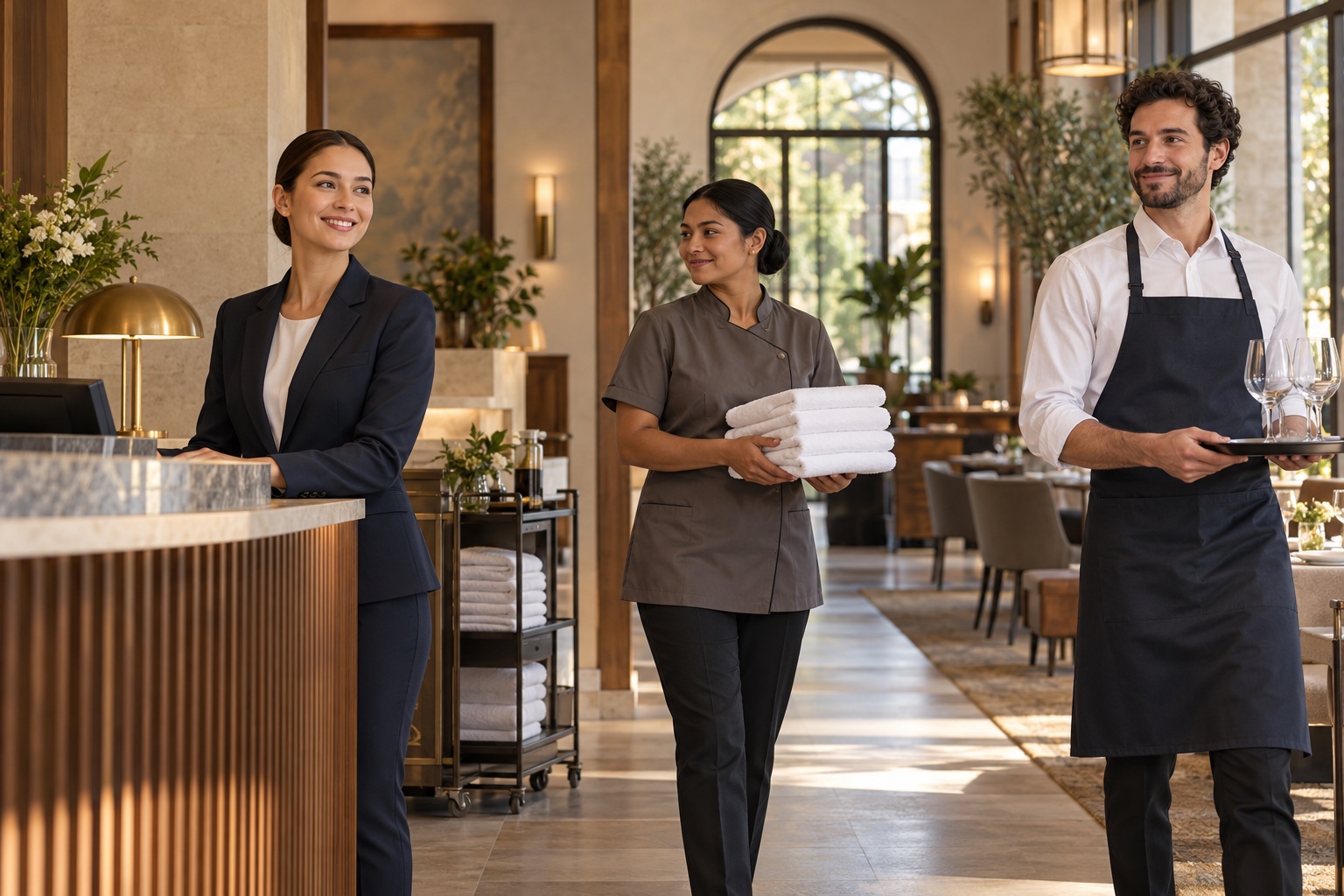
Quick answer: Common types of uniforms in the hotel industry include front-desk and concierge wear, housekeeping uniforms, food-and-beverage service wear, chef clothing, management businesswear, and practical garments for door, valet and maintenance teams. For custom uniforms for hotel employees, specify each role first, check fit and care requirements with samples, and keep an approved record for repeat orders.
Hotel uniform types by department
Use this as a starting role map. A property can combine or omit roles depending on its services; the final outfit plan should reflect the work people actually do.
| Role | Typical garments | What to check |
|---|---|---|
| Reception and concierge | Blazer or suit, shirt or blouse, trousers or skirt, optional tie or scarf | Comfort through a standing shift, consistent colour, easy replacement |
| Housekeeping | Tunic or shirt, trousers, optional apron | Reach and bend comfortably; confirm care instructions and pocket placement |
| Restaurant, bar and banquet service | Shirt, waistcoat or jacket, apron, service trousers | Movement, practical storage and the laundering routine |
| Kitchen | Chef coat, trousers and apron; other items as required by the kitchen | Fit for the work area and compatibility with the site’s hygiene and safety rules |
| Management | Business suit or coordinated separates | Fit, fabric appearance under site lighting and understated branding |
| Door, valet and maintenance | Shirt, jacket or weather layer, utility trousers where appropriate | Weather, movement, visibility and task-specific protection |
Design around the work, then unify the look
Hotel worker uniforms are most useful when guests can recognise a role and employees can move through a shift without adjusting their clothes. Ask department leads to describe a normal busy hour: how much walking, reaching, lifting, serving or outdoor work is involved? Use those answers to set garment and fit requirements.
- Front desk: check the seated and standing fit, sleeve movement and how the colours look under lobby lighting.
- Housekeeping: test bending, reaching, cart work, pocket access and the intended laundry process.
- Food service: check apron coverage and storage, ease of movement and how quickly garments can return to rotation.
- Kitchen and maintenance: follow the property’s hygiene, safety and protective-clothing requirements before choosing a style.
Keep a shared colour and branding system, then use small differences—such as an approved accessory, trim or apron—to distinguish departments. Approve those details on a physical sample; colours can look different across fabrics and lighting.
How to source custom uniforms for hotel employees
A clear brief saves time because it lets the hotel, supplier and sample team discuss the same garments. Prepare:
- A department and role list, with estimated quantities for each garment.
- Brand colours, logo artwork and any placement or decoration requirements.
- Size range and fit preferences, based on staff measurements or an agreed fitting process.
- Care and use conditions, including wash frequency, work environment and seasonal layers.
- The sample approval route and the date by which the hotel needs a confirmed schedule.
Review samples for fit, construction, colour, logo size and placement, and care suitability before approving production. Keep the approved sample or a detailed specification for future replacements. Confirm price, shipping and bulk timing in the project quotation; do not plan an opening around an unconfirmed estimate.
GAZO’s current hotel-uniform programme starts at 100 pieces per style. Paid samples are dispatched within 15 days, while logo printing and embroidery are paid services. The bulk schedule, shipping and project price are confirmed in the quotation.
How boutique and independent hotels source custom staff apparel
A small hotel still has several uniforms to plan: front desk, housekeeping, and often food and beverage or a door team. The headcount in each role may be small, but the work is not the same, so one garment for the whole property rarely holds up on a shift.
Start with a role list and an approximate count for each, then decide which items can share a colour or fabric and which must differ. That brief is what a supplier can quote against.
GAZO’s minimum order is 100 pieces per style. Paid samples are dispatched within 15 days, and logo printing or embroidery is a paid service. A small property can still order a multi-role programme, but the 100-piece minimum applies to each style, not to the order as a whole. Do not set an opening date against a bulk schedule that has not been confirmed.
Once a sample is approved, keep the garment, colour, fabric reference, size chart and logo placement on file. A boutique property feels replacements quickly; the next few shirts need to match the first ones.
Keep reorders consistent
Uniform programmes change as teams grow and garments wear out. Record the approved garment, colour, fabric reference, size chart, logo placement and sample date. Ask the supplier to confirm current material availability before each reorder, and document any approved substitution so later batches do not drift from the original standard.
For more detail, read the hotel staff uniforms by department buyer’s guide and the hotel uniform logo-approval checklist. You can also review the hotel uniform programme overview or send GAZO a project brief.
Hotel staff uniform questions
What are the best professional uniforms for hospitality staff?
The right choice depends on the role. Front-desk teams usually need coordinated businesswear; housekeeping needs room to move and a clear care plan; food service needs practical aprons and garments; kitchen clothing must follow the property’s hygiene and safety rules.
Can one uniform supplier cover several hotel departments?
A supplier may coordinate several garment categories, but confirm the specific products, materials, sample scope and production plan for your project. Keep a separate role and garment specification for each department.
What should I check before ordering hotel uniforms?
Confirm quantities by role, fit and size range, colours across fabrics, logo placement, care requirements, sample approval and replacement standards. Ask for project-specific pricing and delivery timing in writing.
How should a hotel choose fabric?
Choose against the task and care routine rather than appearance alone. Ask for the composition and care instructions, then assess a sample after the intended laundering process where practical.
How do boutique hotels source custom employee apparel?
Write a role list and quantities first, even if each team is small. Approve a paid sample before opening day. GAZO’s minimum is 100 pieces per style, so plan quantities style by style, and keep the approved record for later replacements.