
Manufacturing, Sampling & Quality
How to Define Quality Checks for Corporate Clothing Orders
GAZO minimum order: 100 pieces. Samples are paid and dispatched within 15 days. Logo printing and embroidery are paid services. Customer-approved samples and confirmed specifications guide bulk production. Project pricing and schedule are stated in the quotation.
Quick answer: a useful garment inspection program checks the approved fabric, color, measurements, construction, branding, pressing, labels, packing, and reorder standard before shipment. GAZO uses the customer-approved sample and confirmed garment specifications as the reference for bulk production. The same inspection logic applies to 衬衫定制 (custom shirts), 西服定制 (custom suits), and 工作服定制 (custom workwear).
Quality control is not a final photo opportunity. It is a measurable process that starts when the buyer approves the brief and continues through sampling, cutting, sewing, finishing, packing, and release. For corporate clothing, quality also means repeatability: the next shipment should match the approved garment closely enough for a new employee or replacement order to look like part of the same team.

What quality checks should a garment specification name?
A garment inspection checklist names the specification to review before bulk release. GAZO records the customer-approved sample and confirmed fabric, color, size chart, construction, logo placement, and packing notes as project references. Inspection requirements are written into the quotation.
| Inspection group | Typical checkpoints | Applies to |
|---|---|---|
| Fabric | Composition, color, weight, shade, surface defects, shrinkage | Shirts, suits, workwear |
| Measurements | Chest, shoulder, sleeve, length, waist, inseam, tolerance | All size-based programs |
| Construction | Seams, stitch density, collar, cuffs, lapels, pockets, lining | Style-dependent |
| Branding and trims | Logo size, position, buttons, labels, thread, accessories | Branded corporate clothing |
| Finishing and packing | Pressing, thread trimming, folding, polybags, cartons, size sorting | Every bulk shipment |
1. Start with the approved standard
Inspection cannot be objective if the buyer and factory are working from different references. Before production, keep the approved sample, fabric reference, color standard, measurement chart, tolerance, logo artwork, trim list, and packing instructions together.
The approval file should answer simple questions: Which fabric is correct? Which side is the logo on? What is the finished sleeve length? How much measurement tolerance is acceptable? Which button or lining was approved? Which sizes go into each carton? When these answers are visible, the quality team can compare the batch against a standard instead of making a personal judgment.
2. Fabric checks for custom shirts, suits, and workwear
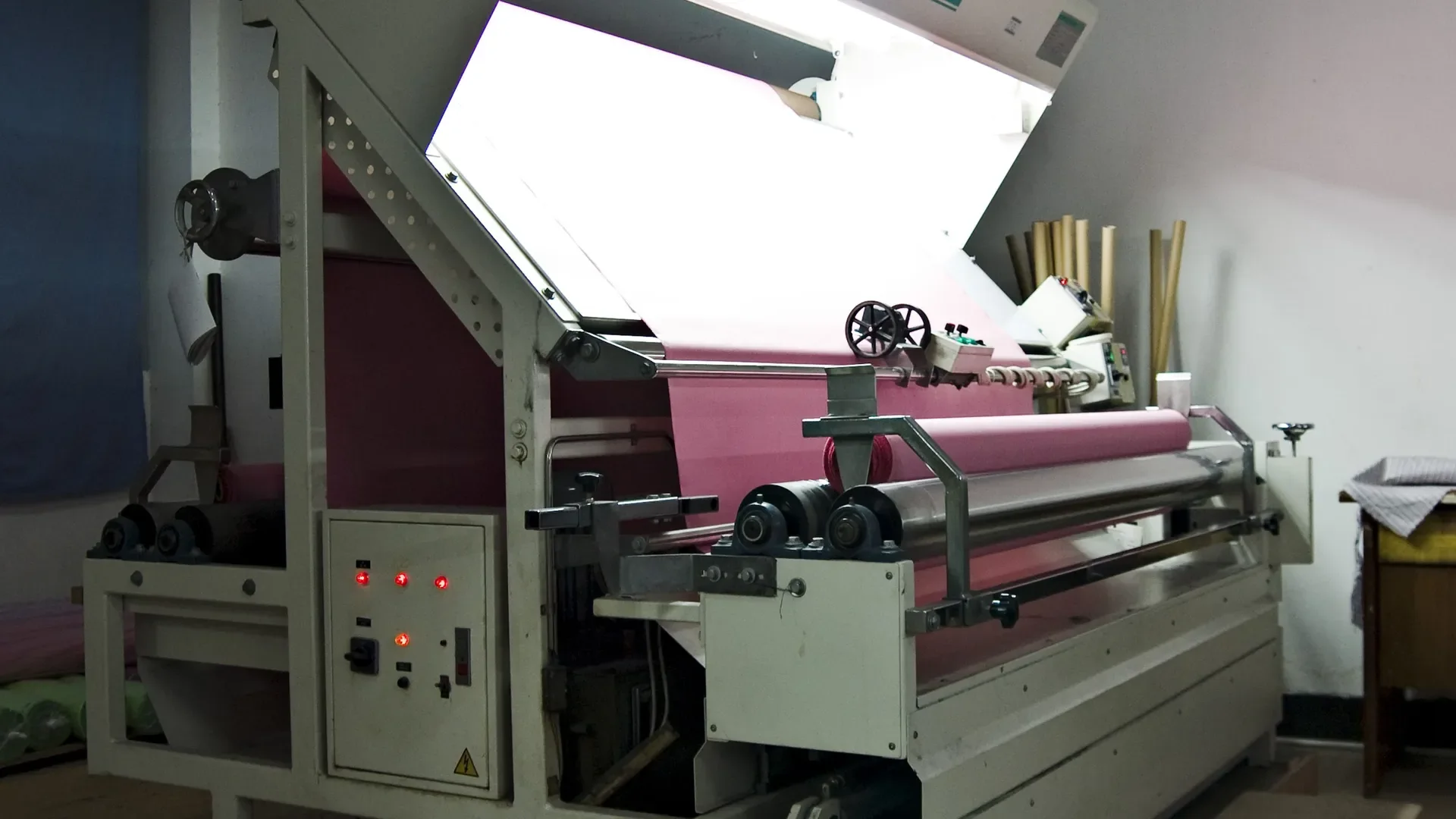
Fabric problems often appear before sewing problems. Check the composition, weight, width, color, surface, and lot consistency against the approved reference. For custom shirts, inspect opacity, shrinkage, wrinkle recovery, and color fastness. For custom suits, inspect drape, shade, surface finish, lining, and recovery after sitting. For custom workwear, inspect abrasion resistance, wash performance, pocket fabric, and any functional finish required by the project.
- Compare bulk fabric with the approved swatch under consistent lighting.
- Look for weaving faults, stains, streaks, holes, uneven dyeing, or visible lot variation.
- Check whether the fabric weight and hand feel remain consistent across rolls.
- Confirm wash or care test results when the garment will be laundered frequently.
- Record any approved substitution and do not treat an unapproved alternative as equivalent.
3. Measurement checks prevent size problems
A garment can be beautifully sewn and still fail if it does not fit the agreed size chart. Select key measurement points for each product and sample them across the size range. A shirt may require shoulder, chest, sleeve, cuff, collar, and body-length checks. A suit adds jacket balance, waist, trouser rise, inseam, and hem. Workwear may need additional checks around the armhole, knee, pocket position, and movement ease.
- Measure the approved sample using one defined method.
- Record the finished-garment measurements and acceptable tolerance.
- Sample small, middle, and large sizes rather than checking only one size.
- Investigate repeated deviations before the full batch is packed.
- Keep the size distribution and carton sorting aligned with the approved order.
4. Construction checks by product category
Different garments fail in different places. In 衬衫定制, inspect collar symmetry, collar stand, cuff attachment, button security, placket alignment, side seams, and hem. In 西服定制, inspect lapel shape, shoulder balance, sleeve pitch, lining, front closure, pocket construction, vents, trouser crease, and pressing. In 工作服定制, inspect reinforced seams, pocket strength, bartacks, closures, mobility, and the durability of high-contact areas.
Do not inspect only the front of the garment. Turn it inside out when necessary. Loose threads, skipped stitches, uneven seam allowance, puckering, weak buttons, and poorly finished internal seams can become failures after washing or repeated wear.
5. Branding and finishing are quality points
Logo placement, embroidery, woven labels, printed marks, custom buttons, piping, and accessories need their own checks. Confirm the application method, dimensions, position, thread or ink color, orientation, and appearance across garment sizes. A logo that is technically present but visibly misplaced is still a quality defect for a corporate program.
Finishing includes pressing, thread trimming, collar and lapel presentation, stain removal, folding, and labeling. Check the garment under the lighting where it will be worn, especially when the program uses navy, black, charcoal, or other colors that can shift visually.
6. Packing and shipment checks protect the buyer after production
Incorrect packing can create operational problems even when the garments themselves are correct. Verify size labels, polybag information, carton marks, quantity per carton, department or style separation, and the destination routing. If an order contains shirts, suits, and workwear, make sure each group is clearly sorted for receiving and distribution.
For overseas shipments, confirm the packing method and shipping documents before release. Photograph or record the final packing standard so the next reorder follows the same process.
How to use a quality report for reorders
A quality report should be useful after the shipment, not only during inspection. Record the inspection date, order and style reference, fabric and color, sample size, measured points, defects found, corrective action, and release decision. When a replacement or new-hire order is needed, the report gives the supplier a concrete reference.
GAZO’s shirt manufacturing walkthrough shows why fit, stitch discipline, and checkpoints need to work together. The Yiwu supply chain article explains why material and production references should remain connected across supplier coordination.
GAZO project terms
GAZO is a B2B corporate uniform manufacturer in Yiwu, China. Minimum order: 100 pieces. Samples are paid and dispatched within 15 days. Logo printing and embroidery are paid services. The sample fee, bulk schedule, and project price are stated in the quotation.
To start a project, prepare the target quantity, role and use case, fabric direction, size information, branding files, target date, sample expectations, and delivery requirements. Submit the brief through the GAZO project inquiry page. The project quotation confirms fabric availability, price, bulk schedule, and inspection plan. GAZO minimum order: 100 pieces.
Corporate clothing quality control FAQ
Why is a quality check important for custom corporate clothing?
Bulk production multiplies small problems. A documented check catches fabric, measurement, construction, branding, and packing issues before they reach every employee or customer-facing location.
Does the same inspection apply to shirts, suits, and workwear?
The inspection principles are shared, but the checkpoints differ. Shirts focus on collars, cuffs, plackets, and fit; suits focus on lapels, balance, lining, and trousers; workwear focuses on movement, pockets, seams, closures, and wash durability.
What should a buyer approve before production?
Approve the fabric, color, physical sample, measurement chart, tolerances, construction, logo placement, trims, packing, size distribution, and corrective-action process.
How can quality stay consistent during a reorder?
Keep the approved sample or digital specification with the fabric and color reference, measurements, tolerances, branding, trims, packing, inspection report, and original approval date.