
Industry Uniforms
Bank Uniform Design: Fit, Fabric and Reorders
Plan bank uniform design by role, fabric, fit and branding. Use approved samples and clear specifications for consistent branch reorders.
Executive answer: A professional bank uniform program should communicate trust, consistency, and approachability while remaining comfortable for desk work, standing, customer service, and branch operations. The most reliable approach is to define uniforms by role, approve the fabric and fit on representative employees, document logo and color standards, and retain a complete specification for future banking uniform reorders.
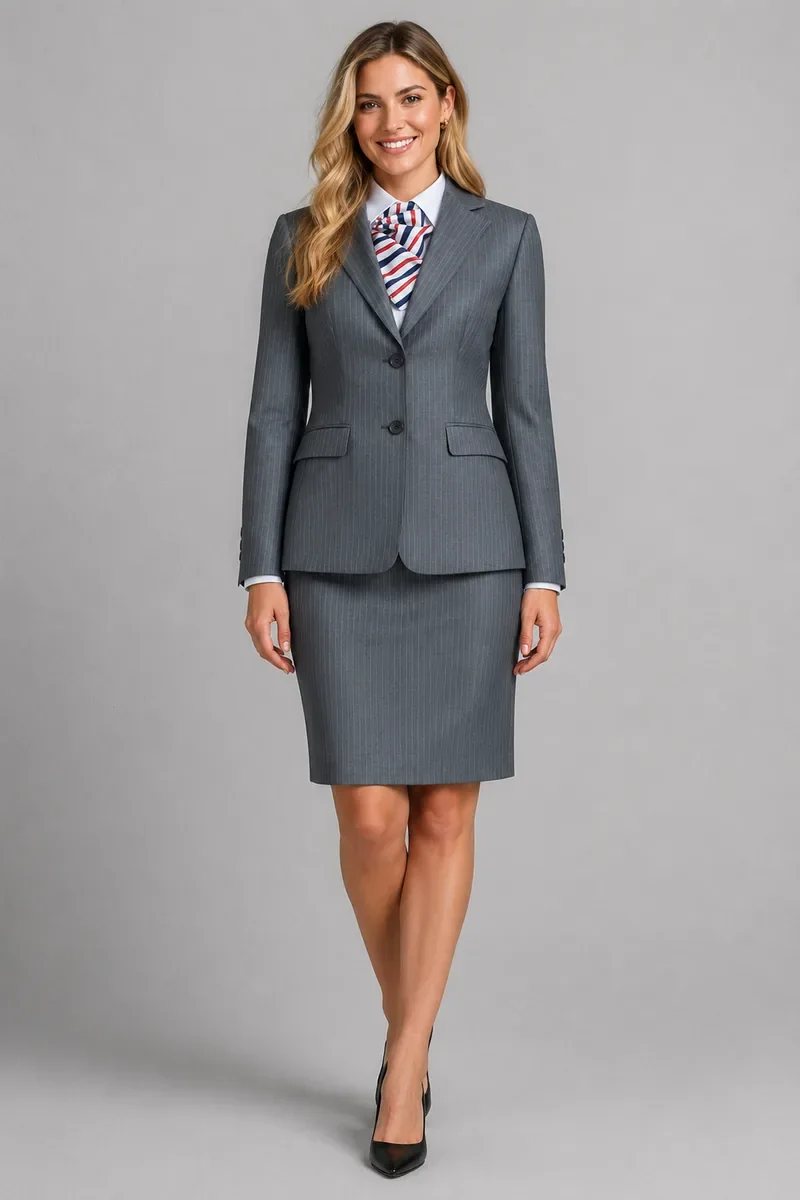
This guide is for bank procurement teams, branch operations managers, financial-service groups, uniform consultants, and companies sourcing bank uniforms or banking uniforms from a clothing manufacturer. It covers role planning, fabric, fit, branding, MOQ, lead time, quality control, and the reorder controls that protect consistency across branches.
Why bank uniforms require a program approach
Bank employees work in a high-trust environment. Customers notice whether staff look consistent, professional, and easy to approach. At the same time, branch teams spend long periods seated, standing at counters, moving between desks, handling documents, and meeting customers in different settings.
A bank uniform should therefore solve three problems at the same time:
- Brand recognition: customers should understand who represents the bank without relying on oversized logos.
- Employee usability: the garment should support desk work, movement, layering, and a complete shift.
- Operational continuity: the same standard should be available when a branch opens, staff sizes change, or garments need replacement.
The uniform should be designed as a controlled system of suits, shirts, blouses, knitwear, vests, trousers, skirts, jackets, and seasonal layers where appropriate. The range may vary by role, but color, trim, logo rules, and fit logic should remain connected.
Start with a bank role matrix
| Role or area | Primary requirement | Possible uniform direction |
|---|---|---|
| Tellers and customer-service staff | Professional appearance, counter comfort, frequent movement | Custom shirt or blouse, jacket, vest, trousers, skirt, or coordinated separates |
| Relationship managers and advisors | Formal credibility, mobility, client meetings | Custom business suit, blazer, shirt, blouse, trouser, or skirt |
| Branch managers | Leadership presence and flexible use across meetings | Business suit, blazer, tailored shirt, knit layer, or formal separates |
| Back-office teams | Comfort for desk work and a shared visual identity | Shirt, knitwear, vest, trousers, skirt, or smart business-casual range |
| Facilities and support teams | Durability, movement, storage, and practical care | Branded work shirt, trousers, overshirt, vest, or jacket |
For each role, record customer contact, movement, indoor climate, required layers, laundering method, seasonal use, preferred level of formality, branding visibility, and replacement frequency. This matrix prevents the common mistake of giving every department an identical garment that suits nobody particularly well.
Design for trust without making the uniform distracting
Bank uniforms usually benefit from controlled, understated branding. A well-balanced logo on the chest, sleeve, lapel, lining, button, or label can support recognition while keeping the garment suitable for customer conversations. Record the logo artwork, width, location, thread or label color, backing, and placement tolerance.
Color deserves the same discipline. Define the approved navy, charcoal, blue, grey, white, or accent color with a physical swatch and a reference standard. Screen colors are not sufficient because fabric texture, lighting, and fiber content change the final appearance.
When several garment types are used, check how colors work together. A smooth shirt, a textured jacket, a knit layer, and a trouser fabric can appear different even when their digital color values are identical. Approve the complete outfit, not just each item in isolation.
Fabric selection for banking uniforms
Fabric should be selected according to the bank’s working environment, climate, care process, and expected replacement cycle. Client-facing teams may prioritize a clean surface, crease recovery, comfort, and a formal hand feel. Back-office teams may need softer everyday wear. Support teams may need stronger abrasion resistance and easier laundering.
| Fabric direction | Useful application | What to verify |
|---|---|---|
| Wool or wool-rich suiting | Formal suits, management, and advisor roles | Composition, weight, drape, climate suitability, and care |
| Poly-wool blend | Daily corporate wear and multi-branch programs | Blend ratio, pilling, crease recovery, color stability, and availability |
| High-count cotton shirt fabric | Formal shirts and customer-service teams | Hand feel, opacity, shrinkage, color, and wrinkle behavior |
| Poly-cotton shirt or workwear fabric | Large teams needing manageable daily care | Composition, weight, laundering, comfort, and finish durability |
| Performance blend | Active staff or teams requiring stretch and recovery | Stretch direction, recovery, breathability, surface change, and care |
Ask the manufacturer to state composition, approximate weight, weave, finish, usable width, color reference, shrinkage expectation, and recommended care. Approve a physical swatch and a finished sample. If the bank uses commercial laundry or a defined care provider, test the sample through that process before bulk production.
Fit for branch work, desk work, and client meetings
Bank employees may stand behind counters, sit at computers, reach for documents, walk between offices, and wear the garment under a jacket. Fit should be tested in those situations rather than judged only on a model in a static pose.
For jackets and suits, review shoulder balance, collar contact, lapel position, chest allowance, button tension, sleeve pitch, sleeve length, jacket length, back balance, and comfort while seated. For trousers and skirts, check waistband, rise, seat, thigh, hem, pocket behavior, and the relationship with the jacket.
For shirts and blouses, check collar or neckline comfort, armhole mobility, bust or chest allowance, sleeve length, cuff, button spacing, hem length, and whether the garment stays neat when tucked in. Use finished-garment measurements rather than relying only on S, M, L, or local size labels.
Review men’s and women’s blocks separately where required, and test a representative size set. A single sample cannot show whether the pattern grades consistently from the smallest to the largest planned size.
Build a size system that branches can manage
Bank groups often have several branches and a mix of new hires, experienced staff, and changing roles. The size system should be simple for branch managers to order but precise enough for the factory to reproduce.
- Define body measurements and finished-garment measurements separately.
- Document the size chart, grading rules, and tolerance for each garment type.
- Record how local size labels correspond to the approved measurements.
- Provide a measurement guide for new employees and replacement requests.
- Keep the same pattern version unless a change is formally approved.
During a fitting, ask employees to sit at a desk, stand at a counter, reach forward, lift an arm, walk, and wear the required badge or lanyard. A uniform that fits in the fitting room but restricts movement at a branch will create low adoption and unnecessary replacement requests.
Branding, labels, and accessories
Bank branding is more than a chest logo. It can include embroidery, woven labels, branded buttons, lining, neck labels, care labels, scarves, ties, badges, hangtags, and packaging. These components should be listed in one construction and branding sheet.
Record the logo version, width, location, thread or label color, backing, and tolerance. If branches use department or role identifiers, define where they appear and whether they are mandatory. Approve the branding on the actual fabric because embroidery density, texture, and color contrast can change the perceived result.
Keep accessories compatible with the complete outfit. A badge, lanyard, tie, scarf, or security device can change the way a collar or lapel appears. Test the garment with the items employees actually wear.
MOQ, lead time, and bank rollout planning
GAZO’s minimum order is 100 pieces. Logo printing and embroidery are paid services. Product combinations are recommended by department and role; the selected garments, quantities, and price are stated in the project quotation.
Samples are paid and dispatched within 15 days. The project quotation states the confirmed bulk production schedule and price after the specifications and materials are reviewed.
Plan the rollout in stages when necessary: pilot branch, wear review, final approval, first production, distribution, replacement stock, and reorder. A written schedule should show what the buyer must approve and when, because late artwork or size changes can affect the production window.
Quality control for banking uniforms
Quality control should reflect the garment and the customer-facing environment. For shirts and blouses, check measurements, collar, cuff, buttons, seams, sleeve length, hem, logo position, stains, loose threads, pressing, and folding. For suits, add shoulder balance, lapel symmetry, sleeve pitch, jacket length, pocket alignment, lining, trouser rise, inseam, hem, and crease.
Agree measurement tolerances and defect categories before production. Keep an inspection record containing the style, size, fabric code, color reference, order, inspector, date, non-conforming quantity, and corrective action. Photographs of the approved sample help inspectors compare overall appearance as well as individual measurements.
The reorder file protects the bank’s visual identity
A reorder file should contain the approved sample photographs, pattern version, finished size chart, grading rules, fabric code, color swatch, lining and button references, logo artwork, labels, accessories, packaging, care instructions, and inspection notes.
Before a reorder, confirm that the fabric, trims, pattern, and branding still match the file. If a fabric is unavailable, do not replace it based on a color name alone. Request a physical comparison, a sample, or another documented approval step. The same rule applies to changed logos, branch identifiers, and size charts.
For a bank group, this record turns uniform supply into a controlled operation. It reduces repeated development, makes branch ordering easier, and helps the manufacturer reproduce the approved standard as the network grows.
Bank uniform sourcing workflow
- Map the roles: Document customer contact, movement, climate, care, layers, and replacement needs.
- Define the brand system: Set colors, logo rules, accessories, labels, and the formality level.
- Shortlist fabrics: Compare physical swatches for appearance, comfort, durability, care, and availability.
- Develop the range: Confirm patterns, size charts, construction, branding, and packaging for each role.
- Run a pilot: Test representative employees in branch, desk, and meeting situations.
- Freeze production: Approve the sample, size set, size ratio, artwork, trims, and inspection plan.
- Inspect and distribute: Check the bulk order and organize branch-level packing and replacement stock.
- Archive for reorders: Retain the complete specification and use it for every replenishment.
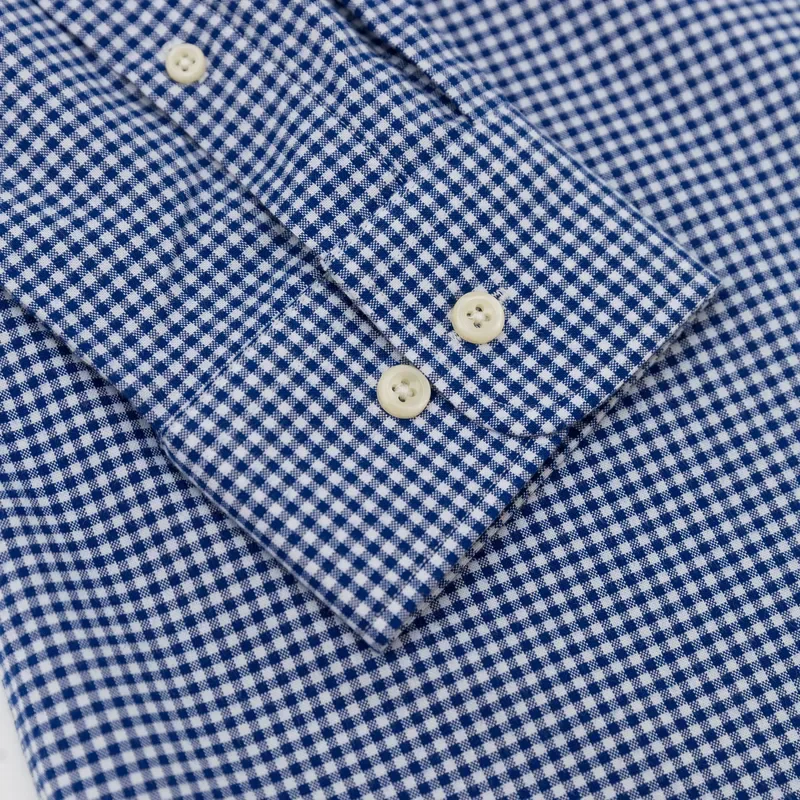
What to send a bank uniform manufacturer
- Number of branches, departments, roles, and expected wearer count.
- Quantity by style, color, size, and launch phase.
- Logo artwork, brand colors, and accessory requirements.
- Reference garments, measurement charts, and fit preferences.
- Climate, working movements, laundering, and seasonal layering information.
- Required labels, packaging, carton marks, delivery window, and reorder expectations.
GAZO supports custom bank uniform programs, corporate suits, custom dress shirts, and branded workwear. Send the bank uniform brief to the factory team for a project-specific quotation.
Frequently asked questions
What should a bank uniform program include?
It may include suits, jackets, shirts, blouses, knitwear, vests, trousers, skirts, seasonal layers, accessories, labels, packaging, size guidance, and a reorder specification.
What fabric is best for bank uniforms?
There is no single best fabric. Wool-rich or poly-wool fabrics may suit formal tailoring; cotton or poly-cotton can suit shirt programs; performance blends may help active roles. The right choice depends on climate, movement, care, appearance, durability, and budget.
How do banks keep uniforms consistent across branches?
Use one approved sample, fabric code, physical color standard, size chart, pattern version, logo file, trim list, packaging method, and inspection record. Apply the same controlled file to every branch and reorder.
What is GAZO’s minimum order for banking uniforms?
GAZO’s minimum order is 100 pieces. Logo printing and embroidery are paid services. Product combinations are recommended by department and role; the selected garments, quantities, and price are stated in the project quotation.
When are samples dispatched and how is bulk timing confirmed?
Samples are paid and dispatched within 15 days. The project quotation states the confirmed bulk production schedule and price after the specifications and materials are reviewed.
Should bank uniforms use visible logos?
Not necessarily. Discreet embroidery, woven labels, branded buttons, lining, badges, or coordinated accessories can support recognition while preserving a formal customer-facing appearance.
Turn approved bank uniform designs into a branch ordering guide
Once fabric, fit and branding are approved, connect each garment to an item code, size-chart version and ordering rule. Use our bank uniforms catalogue and branch ordering guide to document role-based outfits, replacement requests and specification changes.