
Industry Insights
How to Plan Hotel and Service Workwear That Teams Can Actually Wear
A practical guide to designing hotel, retail, property, and service uniforms by role, wash cycle, fabric performance, branding, and reorder needs.
Quick answer: effective hotel and service workwear starts by separating each department’s tasks, movement, wash cycle, and customer-facing role. Build one coordinated visual system, then specify fabric, fit, pockets, branding, sizing, and reorder records for each garment group. This prevents a polished front-desk uniform from becoming impractical for housekeeping, food service, maintenance, or outdoor teams.
Hotels, retail stores, property operations, restaurants, and customer-service businesses often make the same mistake: they choose one attractive look and try to force it onto every department. A better uniform program preserves the brand while letting each role work safely and comfortably through a real shift.
Start with departments, not a single garment
The first question is not “What should the uniform look like?” It is “What work must this person do while wearing it?” A lobby host, housekeeper, restaurant server, kitchen staff member, technician, and property manager need different garment logic even when they share a color palette and logo.
| Department | Main operating need | Useful garment direction |
|---|---|---|
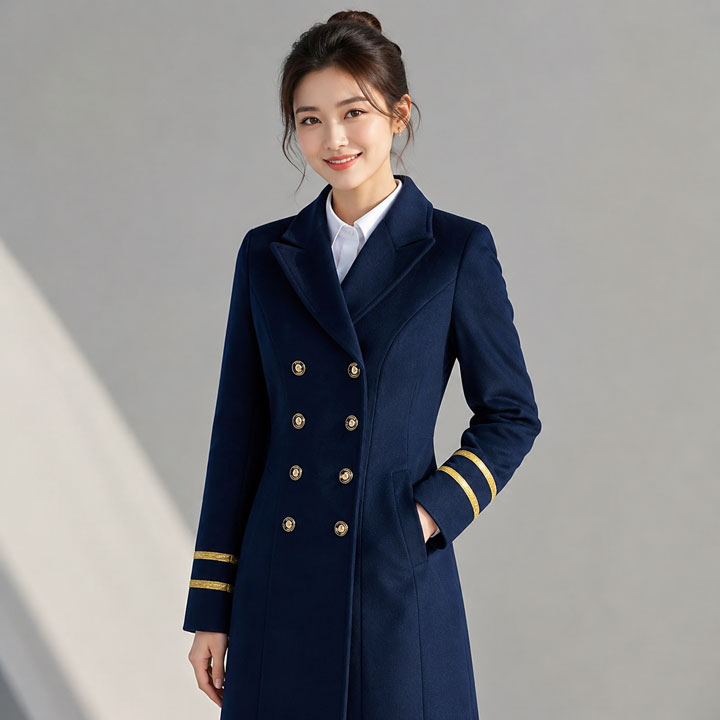
| Front desk / reception | Polished, recognizable, comfortable through long standing periods | Blazer or vest, shirt or blouse, tailored trousers or skirt, scarf or tie |
| Housekeeping | Mobility, wash durability, practical pockets | Tunic, polo, utility trousers, apron, breathable layer |
| Food and beverage | Fast movement, stain management, clean presentation | Shirt, vest, apron, service trousers, role-based accessories |
| Kitchen | Heat, hygiene, frequent laundering | Chef coat, kitchen trousers, apron, cap or headwear |
| Maintenance / property | Protection, abrasion resistance, tool access | Work shirt, utility trousers, outer layer, task-specific details |
1. Choose fabrics around the wash and work cycle
Fabric performance needs to match the daily reality of the role. Hotel rooms, dining areas, laundry routes, service counters, outdoor entrances, and maintenance spaces all impose different demands. Selecting fabric only from a showroom swatch leaves too much risk in the project.
- High-laundry departments: prioritize dimensional stability, color fastness, easy care, and seam durability.
- Guest-facing teams: balance a clean visual finish with wrinkle recovery and shift-long comfort.
- Warm or active roles: test breathability, weight, and freedom through the shoulder, arm, and knee.
- Outdoor teams: plan a coordinated weather layer instead of adding a mismatched jacket after launch.
- Kitchen and hygiene-sensitive roles: confirm the intended cleaning process and avoid construction that holds heat unnecessarily.
Poly-cotton, performance blends, twill, and easy-care woven fabrics are common directions for operational workwear. TR or poly-viscose suiting may be better for reception and management pieces. The right choice depends on climate, laundering method, shift length, cost target, and the desired service level.
2. Build one visual system with role-specific variations
A uniform program does not need every employee to wear the same garment. The visual system can be held together with one controlled color palette, shared logo placement, matching hardware, consistent shirt color, or coordinated scarves, ties, aprons, and name badges.
For example, a hotel may use the same navy base across front desk blazers, concierge suits, restaurant aprons, and property jackets, while each department receives a different fabric or silhouette. This supports recognition without making the housekeeping team work in a reception jacket.
3. Test movement and pocket function before bulk approval
Every department should test the sample in the movements that define the job. A garment that looks correct standing still may fail when a housekeeper bends, a server carries a tray, a receptionist reaches for documents, or a technician uses tools.
- Run a real shift simulation: bend, reach, sit, lift, walk, and work at the normal counter or station.
- Check pressure points: inspect shoulder, underarm, waist, hip, knee, and seat ease.
- Review pocket placement: confirm pockets are useful, secure, and do not distort the garment when loaded.
- Test after laundering: check shrinkage, twisting, fading, pilling, and logo condition when wash frequency is high.
- Record the approved sample: preserve measurements, fabric, trims, and application details for inspection and reorders.
4. Handle branding as a specification, not an afterthought
Branding can include embroidery, woven labels, printed marks, custom buttons, piping, scarves, ties, apron graphics, and name-badge placement. Define the method, logo dimensions, colors, position, and approval reference before production starts.
For multi-department programs, use branded details to support fast recognition rather than decoration. A small lapel pin, consistent chest logo, accent scarf, or color-coded apron can distinguish roles while preserving the overall identity.
5. Plan sizes, reserves, and reorders from day one
Uniform programs do not end at the launch date. Staff turnover, seasonal layers, garment loss, and different department wash rates make replenishment inevitable. The most stable programs keep a structured order file with the approved sample, fabric reference, color standard, logo file, measurements, size breakdown, carton marks, and packing instructions.
For garments with different usage levels, order reserve stock strategically. High-wash departments often need a deeper rotation than reception or management teams. A precise size distribution is also more useful than a generic S/M/L guess, especially across mixed roles and varied body shapes.
How GAZO supports service and workwear projects
GAZO manufactures corporate clothing in Yiwu across shirts, business suits, workwear, coordinated garments, sampling, branding, quality control, and repeat orders. The site includes programs for hotel uniforms, retail uniforms, property workwear, and broader corporate workwear.
Use the customization process to organize a brief around roles, quantities, fabric direction, branding, sample approval, and delivery needs, then submit a project inquiry for a specific review.
Hotel and service workwear FAQ
Should every hotel department wear the same uniform?
No. Departments should share a visual system, but each garment should be built for the job. Reception, housekeeping, food service, kitchen, maintenance, and management have different movement, washing, and safety requirements.
What fabric is best for hotel and service uniforms?
There is no single best fabric. Poly-cotton and easy-care blends often suit high-laundry roles; suiting fabrics can work well for reception and management; stretch or performance fabrics can help active teams. Confirm the fabric against the actual wash and work cycle.
How many uniform sets should be ordered per employee?
It depends on the department, wash frequency, and rotation plan. High-laundry roles typically need more than customer-facing roles with lower wash exposure. Include reserve stock for new hires and replacements.
How can a uniform program stay consistent across reorders?
Keep the approved sample, fabric and color reference, size chart, logo placement, trims, packing instructions, and original approval date in one controlled reorder file.