
Industry Insights
How to Build a Corporate Suit Program That Stays Consistent Across Reorders
A procurement guide to suit silhouettes, fabric approval, sizing, branding, quality control, and repeat orders for corporate teams.
GAZO is a B2B corporate uniform manufacturer in Yiwu, China. Minimum order: 100 pieces. Samples are paid and dispatched within 15 days. Logo printing and embroidery are paid services. GAZO recommends product combinations by department and role. Bulk production timing and project pricing are stated in the quotation.
Corporate suits do more than make a team look formal. For banks, hotels, sales organizations, property companies, aviation teams, and executive groups, they establish a consistent first impression while giving procurement one standard to manage across new hires and replenishment orders. The strongest suit programs are designed as controlled systems, not one-off garments.
What makes a corporate suit program repeatable?
A repeatable suit program records the decisions that affect appearance and fit: jacket construction, silhouette, lapel, fabric, lining, buttons, trousers, logo treatment, size grading, approved sample, and packing method. That record gives the next order a reliable point of comparison instead of forcing the team to restart from a photo or memory.
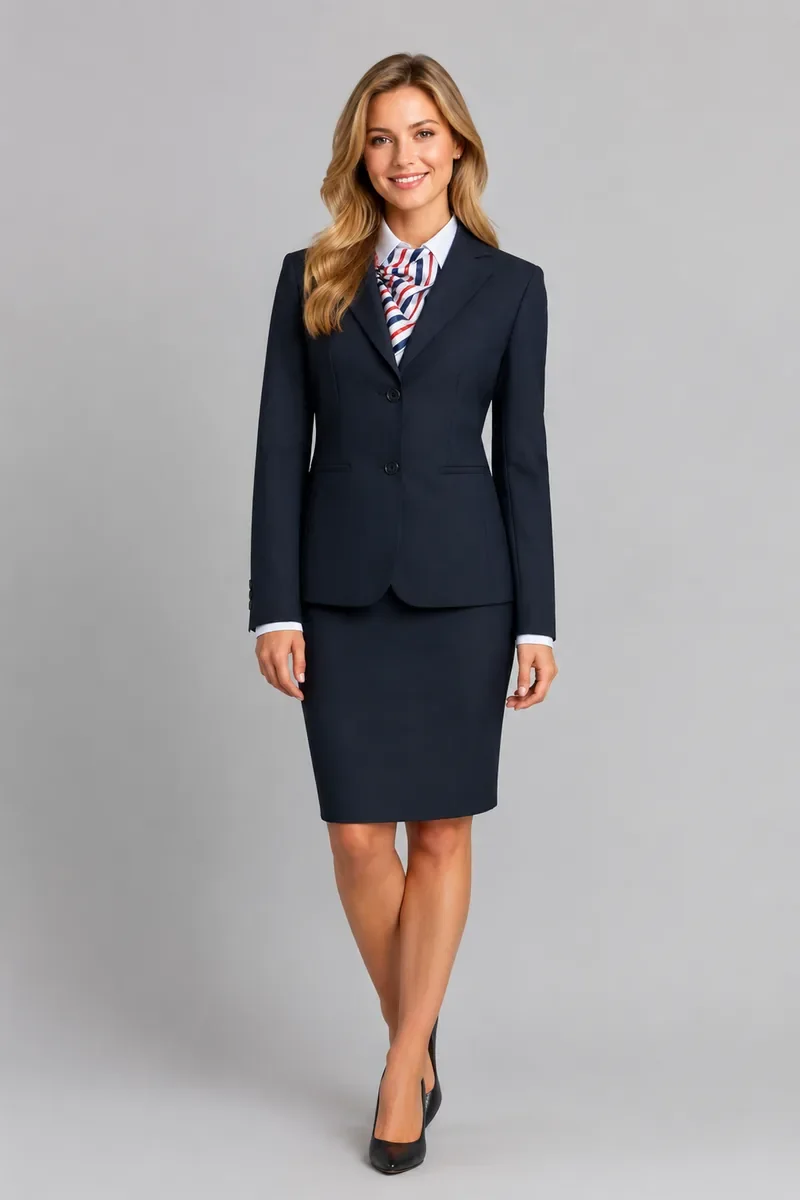
1. Define the role before choosing the silhouette
The best suit for a front desk team is not always the best suit for executives, relationship managers, or field sales. Start with the actual role: time spent standing, travel frequency, client contact, local climate, garment-care access, and how formal the brand needs to appear.
| Team type | Useful suit direction | What to confirm |
|---|---|---|
| Front desk and hospitality | Structured jacket with controlled color and easy-care trousers or skirt | Comfort through long shifts, color stability, accessory coordination |
| Banking and executive teams | Classic business silhouette with refined fabric and minimal branding | Fit, drape, shirt and tie compatibility, premium presentation |
| Sales and travel teams | Wrinkle-recovering fabric and movement-friendly construction | Mobility, crease recovery, practical pocket layout |
| Property and service management | Professional jacket paired with durable, coordinated separates | Wash routine, weather exposure, repeat-order requirements |
GAZO’s suit configurator starts the discussion with two-piece, three-piece, or jacket-only composition, then moves through Korean slim, Italian business, or British classic silhouettes. These options are a useful starting framework; the final construction should be based on the target wearer and project brief.
2. Choose fabric for service life, not only the sample room
Suiting fabric controls the visual result, but it also affects comfort, recovery after sitting, color consistency, and the viability of a later reorder. A buyer should ask for the composition, weight, finish, care expectation, available color reference, and whether the same direction can be supplied again after the initial production run.
- TR or poly-viscose suiting: often selected for reliable drape, wrinkle resistance, and cost control in team programs.
- Wool or wool blends: useful when a higher-end hand feel and refined appearance matter, with a more careful maintenance plan.
- Stretch blends: worth evaluating for teams that travel, stand, and move frequently; check recovery at elbows, knees, and seat areas.
- Performance finishes: should be tested against the actual wear and cleaning routine, not accepted on a claim alone.
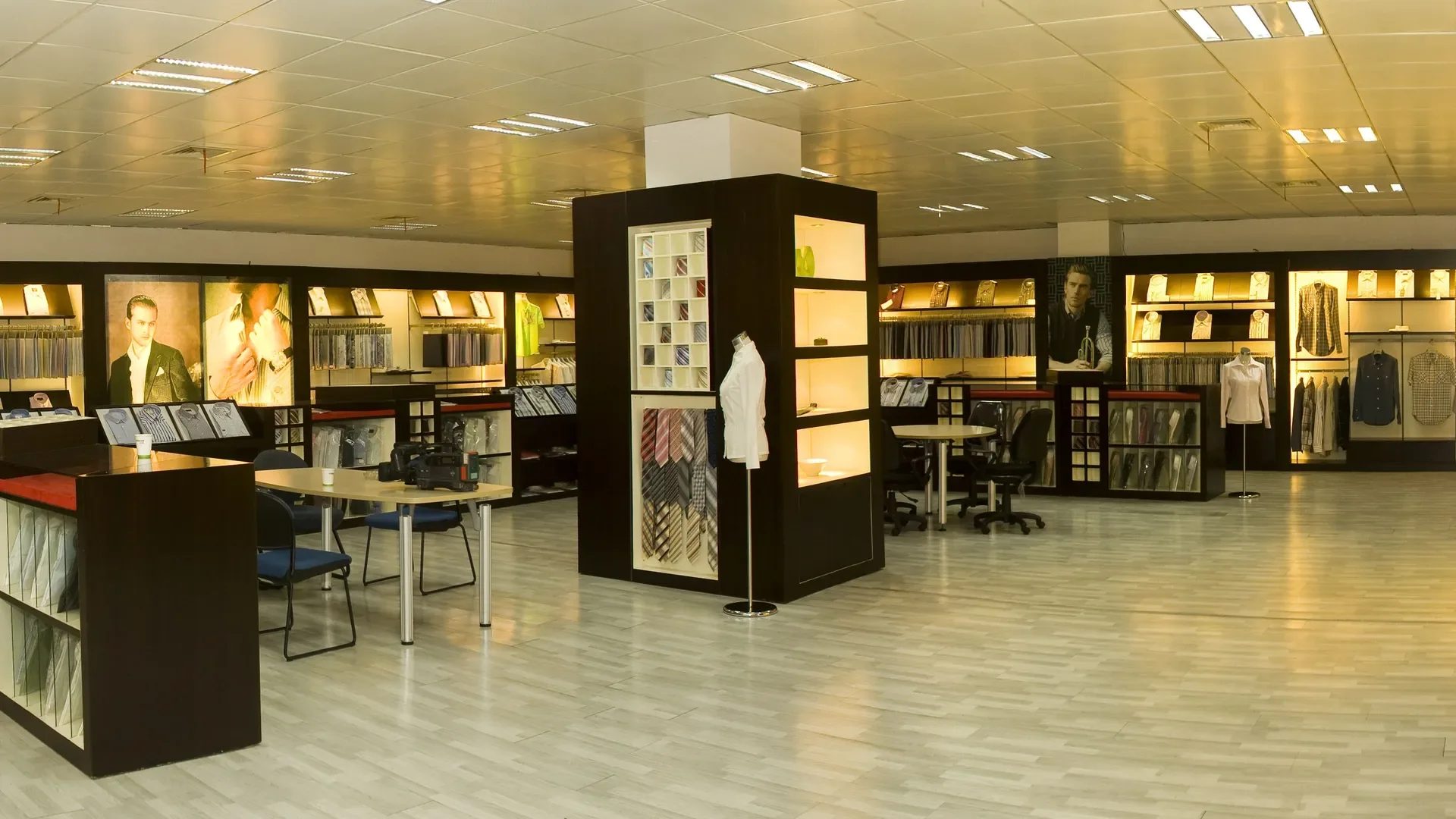
3. Lock the construction details in the sample
Silhouette gets the most attention, but details create the repeat-order risk. State the lapel type, front-button configuration, pocket type, lining level, trouser cut, vent, button material, and all color references in the approval file.
For a standard corporate program, a notch lapel, single-breasted two-button front, flap pockets, full lining, and flat-front trousers are familiar baseline choices. Those choices are not mandatory; they are simply easier to explain, sample, and reproduce. More distinctive options such as peak lapels, double-breasted fronts, contrast lining, or custom buttons should be approved in the physical sample with the exact intended fabric.
4. Manage sizing as a production input
Corporate suiting fails when sizing is treated as a late-stage administration task. Size labels vary by factory and market, so buyers should approve finished-garment measurements and establish the size distribution before bulk production.
- Approve fit samples: check jacket shoulder, chest ease, sleeve length, waist, trouser rise, inseam, and hem.
- Collect staff measurements: use a consistent method rather than guessing by small, medium, and large labels.
- Define grading: document how each size changes from the approved base size.
- Hold tolerance limits: agree on measurable production tolerances before inspection.
- Plan replacement stock: include likely new-hire and high-turnover sizes in the order plan.
5. Keep branding controlled and role-appropriate
For formal clothing, subtle branding usually creates the strongest result. A small embroidery, lapel pin, woven label, custom button, scarf, tie, or lining detail can carry the corporate identity without turning the suit into a promotional surface. Specify placement, dimensions, colors, and approved reference images.
When several departments share one program, use accessories or trim to distinguish roles while keeping the jacket and trouser fabric consistent. This reduces the visual mismatch that appears when separate suppliers interpret the same navy or charcoal differently.
6. Set an inspection plan before production begins
Quality control works best when it compares bulk garments against a documented standard. The inspection should cover fabric shade, jacket and trouser measurements, stitch quality, buttons, lining, lapel shape, logo placement, pressing, labels, and size sorting.
GAZO’s garment inspection checklist overview explains why inspection is a chain of checkpoints rather than one final gesture. For suit programs, the approved sample and written measurement chart are the most useful references at every checkpoint.
How GAZO supports corporate suit projects
GAZO is a Yiwu-based corporate clothing manufacturer supporting custom dress shirts, business suits, workwear, fabric review, sampling, branding, production, inspection, and repeat-order planning. Buyers can use the suit customization workflow to establish composition, silhouette, lapel, buttons, pockets, lining, trousers, and expected quantity before requesting a project review.
For coordinated programs, pair a suit standard with the corporate shirt customization workflow, then submit the final brief through the GAZO project inquiry page.
Corporate suit program FAQ
What is the usual MOQ for a custom corporate suit program?
GAZO’s minimum order is 100 pieces. Logo printing and embroidery are paid services. Product combinations are recommended by department and role; the selected garments, quantities, and price are stated in the project quotation.
When are samples dispatched and how is bulk timing confirmed?
Samples are paid and dispatched within 15 days. The project quotation states the confirmed bulk production schedule and price after the specifications and materials are reviewed.
Which suit silhouette is best for a corporate team?
There is no universal answer. A classic business silhouette is broadly adaptable, while slimmer or more structured silhouettes should be chosen after fitting the intended staff group and brand environment.
How do we make later suit reorders consistent?
Keep the approved sample, fabric reference, color standard, measurement chart, tolerance, trims, branding placement, and packing instructions in one reorder file.